


Previous part:

I was new to the electricity sector as a software engineer. I came into the industry from web development.
The web was a pretty straightforward world. I usually knew for whom and why we developed a solution. Even when the software was highly technical, it was still clear who used it and who paid for it.
When I came into energy, everything was different.
Customers, users, regulators, and all possible three-letter abbreviations that meant companies, agencies, markets, services, and roles. It was hard to understand who actually bought the software. Who used it. Who paid for it. Who paid if something went wrong. Who defined how it should work. Who checked that it worked as it should.
And many... no. A LOT of other “who” and “why” questions.
Not knowing these answers might be acceptable in another industry. In energy, the structure of the sector shapes the architecture of the software. It defines requirements and explains why those requirements exist. A feature that looks strange from a purely technical perspective may be necessary because the customer must fulfil a legal, operational, market, security, or reporting obligation.
The person using the software may not be the person buying it. The company buying it may not be the organisation that defined the requirement. The asset owner may not be the system operator. The party that loses money when something fails may not be the party that approved the budget.
I am writing this article for colleagues who entered energy from other fields and are still trying to understand how the whole system fits together. By the end, you should have a clear mental model showing who owns the assets, who operates the power system, who buys and sells electricity, where the money comes from, and who defines the rules.
Regulation created the structure
Laws, regulations, network codes, national rules, licences, and agreements define the main actors of the electricity sector and the way they interact. Therefore, regulation is not a separate layer added on top of an already existing market. It is one of the main forces that created the current structure.
The common EU framework is primarily established by the Electricity Directive, Directive (EU) 2019/944, and the Electricity Regulation, Regulation (EU) 2019/943. Together, they define common principles for generation, transmission, distribution, storage, supply, consumer participation, system operation, and electricity markets.
These documents are not implementation manuals for software engineers. They define something more fundamental: the environment in which energy companies, grid operators, markets, and eventually our software must work.
Why electricity is regulated so heavily
Electricity is a commercial product, but the power system is also critical infrastructure.
Electricity cannot be handled like a normal product that is manufactured, placed in a warehouse, and delivered later. Production and consumption must remain balanced continuously, while thousands of producers and millions of consumers use the same interconnected physical system.
The network itself also behaves differently from an ordinary competitive business. Building several competing transmission grids between the same regions would be enormously expensive and technically unnecessary. The same is generally true for local distribution networks. It would make little sense for several companies to dig up the same street and install parallel cables so that every household could choose its preferred physical grid.
Transmission and distribution networks are therefore treated as regulated monopolies. Competition is introduced where it is practical, particularly in generation, trading, and supply, while access to the physical networks is regulated.
This gives us the first part of the mental model:
Generation, trading, and supply can be competitive. Transmission and distribution are regulated network activities.
Because users cannot realistically choose another physical network, system operators cannot freely set any price or access condition they want. Their tariffs, investments, service obligations, and treatment of network users are supervised by regulators.
Why one company does not simply do everything
Historically, electricity systems were often organised around vertically integrated utilities. One company could generate electricity, own and operate the network, and sell electricity to consumers.
From a technical perspective, that structure looks convenient. One organisation owns the chain and coordinates it internally.
From a market perspective, it creates a conflict of interest.
Imagine a company that owns the transmission network and also owns power plants. Competing generators need access to the same network. The network owner could favour its own generation business by delaying connections, restricting access, using commercially sensitive information, or applying different conditions to competitors.
The EU response was unbundling, which separates network operation from potentially conflicting interests in generation and supply. The European Commission describes unbundling as one of the main pillars of the internal energy market because network operators must act independently and provide non-discriminatory access to infrastructure. The Commission’s overview of internal energy market governance explains the three main transmission unbundling models:
Ownership unbundling, where network ownership and operation are separated from generation and supply interests.
Independent system operator, or ISO, where the integrated company may retain formal ownership of the network, but an independent organisation operates, maintains, and develops it.
Independent transmission operator, or ITO, where the network remains inside an integrated group but is operated through an independent subsidiary under detailed rules.
Distribution unbundling is less absolute. A distribution system operator that belongs to a vertically integrated group must generally be independent in its legal form, organisation, and decision-making, but EU law does not automatically require separate ownership of its assets. The directive also allows Member States to exempt some smaller integrated undertakings from parts of these requirements. The details are set out in Article 35 of the Electricity Directive.
The accurate conclusion is therefore not that a company can never participate in more than one part of the sector. The conclusion is that network operation must be sufficiently independent from competitive interests so that access remains fair.
Once this principle is introduced, the sector separates into several roles:
generators produce electricity;
transmission system operators operate high-voltage transmission systems;
distribution system operators operate regional and local networks;
suppliers sell electricity contracts to consumers;
traders buy and sell electricity and related products;
market operators organise trading;
regulators supervise network and market activities.
These roles are not merely names invented by companies. They are part of the regulated design of the sector.
Who creates and enforces the rules
The regulatory chain begins at EU level, but not every rule comes from the same organisation.
The European Commission proposes legislation and develops energy policy. The European Parliament and the Council adopt EU legislation. Regulations apply directly, while directives define results that Member States must implement through national law.
The main legislation is supported by more detailed network codes and guidelines. These rules cover grid connection, system operation, emergency procedures, capacity allocation, congestion management, forward markets, day-ahead and intraday trading, and electricity balancing. ACER provides a useful overview of the binding European electricity market rules.
At national level, independent regulatory authorities supervise the market and regulated network businesses. Their responsibilities vary between countries, but they commonly include approving or reviewing network tariff methodologies, certifying system operators, supervising unbundling, monitoring competition, protecting consumers, and enforcing national and EU rules. In Austria, this role is performed by E-Control.
At European level, the European Union Agency for the Cooperation of Energy Regulators, or ACER, coordinates national regulators and acts where cooperation across borders is required. ACER contributes to common methodologies, monitors markets, and takes certain decisions when national regulators cannot reach agreement.
ENTSO-E and the DSO Entity have different roles. ENTSO-E coordinates transmission system operators and contributes technical expertise, common methodologies, planning, data publication, and operational cooperation. The DSO Entity performs a corresponding European coordination role for distribution system operators. Neither organisation is an independent public regulator.
Technical standards add another layer. Standards from organisations such as IEC, CENELEC, ETSI, and ISO may define communication protocols, security controls, equipment behaviour, interoperability, testing, and lifecycle requirements. A standard is not automatically a law, but it may become mandatory through regulation, a grid code, a licence, a contract, or a procurement specification.
The simplified chain looks like this:
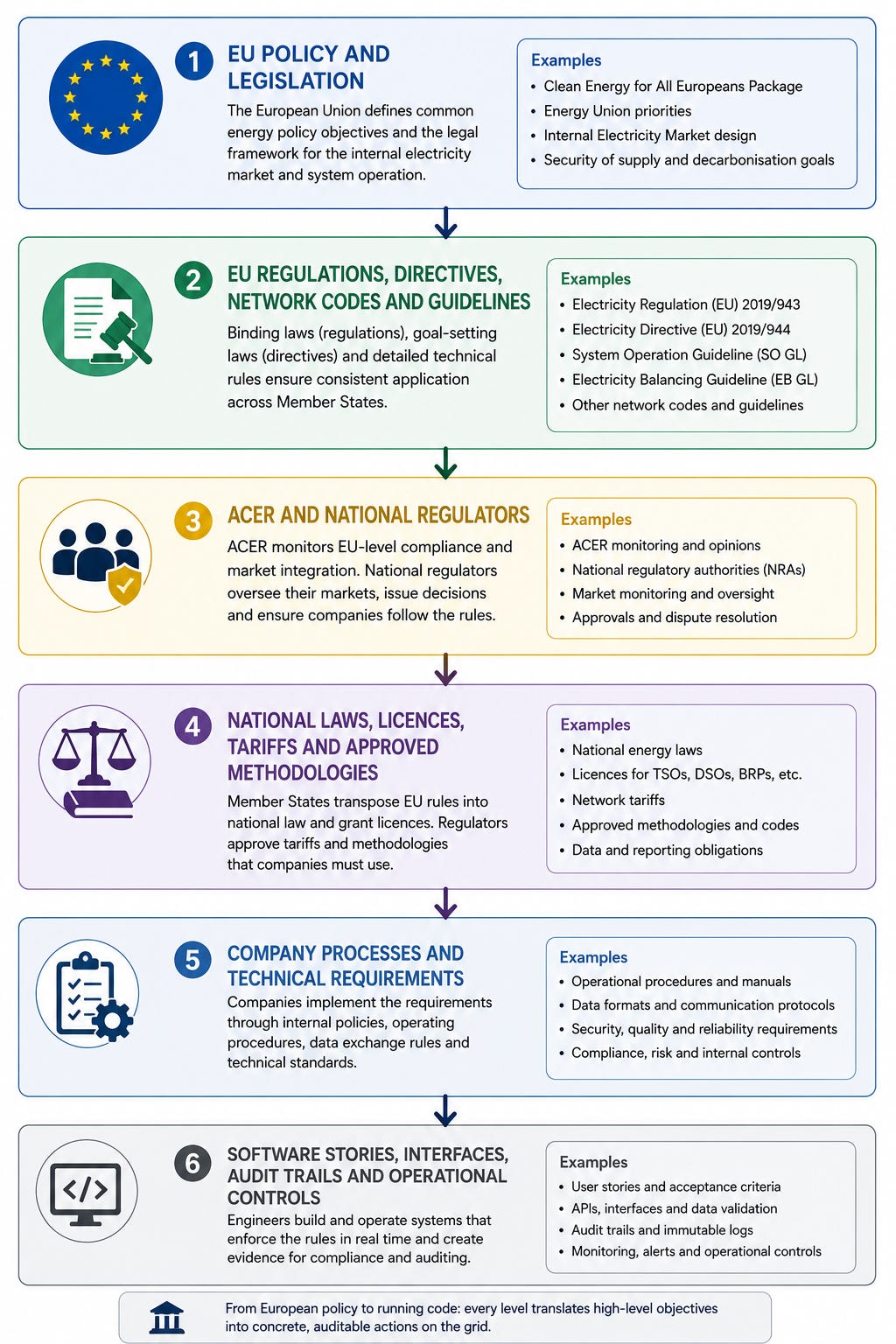
Figure 1: A software requirement can travel a long way before it reaches a development team.
This explains why a small validation rule in Jira may originate from an EU regulation, be interpreted by a national regulator, translated into a process by a system operator, and finally become a requirement for a software vendor.
Who owns the assets of the power system?
There is no single European company that owns everything between a power plant and a wall socket. The power system consists of assets owned by generators, transmission companies, distribution companies, governments, municipalities, investment funds, industrial companies, cooperatives, and private households.
It helps to separate the physical system into four groups.
Generation assets
Generation assets convert another form of energy into electrical energy. They include nuclear, gas, coal, hydro, wind, solar, biomass, and other power plants.
Their ownership can be private, public, municipal, cooperative, or mixed. A large utility may own dozens of plants. An industrial company may own generation for its factory. A household may own rooftop solar panels.
Generation is generally a competitive activity. A generator earns revenue by selling energy and, depending on the technology and market, may also sell balancing capacity, balancing energy, ancillary services, certificates, or other products.
Transmission assets
The transmission grid transports large amounts of power over long distances at high voltage. It connects large generators, large consumers, distribution networks, and neighbouring transmission systems.
Transmission assets include lines, cables, substations, transformers, switchgear, protection systems, communication networks, and control centres. They are normally owned or controlled by certified transmission system operators (TSO), although the ownership structure differs by country and by unbundling model.
A TSO can be publicly owned, privately owned, publicly listed, or held through a mixed structure. The ownership model does not change the fundamental point: the company performs a regulated system function and must satisfy independence, access, operational, and certification requirements.
The ENTSO-E transmission system map gives a useful view of the major transmission infrastructure operated by European TSOs.
Distribution assets
Distribution networks connect most consumers and smaller generators to the power system. They contain regional substations, medium and low-voltage lines and cables, local transformers, switching equipment, meters, communication systems, and an increasing number of distributed resources.
Distribution system operators can be large national or regional companies, municipal utilities, private companies, public companies, or members of larger utility groups. Because distribution is a regulated monopoly, consumers usually cannot choose their DSO. Their physical location determines which network connects them.
They can, however, normally choose a supplier.
This distinction is fundamental:
The supplier manages the customer’s commercial electricity contract. The DSO operates the local network to which the customer is physically connected.
Changing supplier does not cause another company to install a second cable to the building. The commercial relationship changes, while the physical connection normally remains with the same DSO.
Customer and industrial assets
Not every electrical asset belongs to a generator or grid operator.
Factories, railway systems, data centres, mines, hospitals, airports, and large commercial sites may own substations, transformers, internal networks, generators, batteries, protection systems, and communication infrastructure. Households may own solar panels, batteries, heat pumps, and electric vehicle chargers.
This creates an important boundary between the public network and the customer installation. The grid operator defines connection conditions, but the customer owns and operates equipment on its side of the boundary. Protection, metering, remote control, data exchange, maintenance, and fault responsibilities must be clearly assigned.
Knowing who owns an asset is therefore only the beginning. We still need to ask who operates it, who controls it in real time, who defines its requirements, and who carries the consequences when it fails.
Who operates the power system?
Ownership answers who possesses the assets. Operation answers who is responsible for making the system work.
The word operator appears everywhere in the sector. A power plant has operators. A substation may be remotely operated from a control centre. A distribution network has a system operator. A transmission network has another system operator. A market also has an operator.
We therefore need to ask what exactly is being operated.
Transmission system operators
A transmission system operator, or TSO, is responsible for operating the transmission system and maintaining system security within its area of responsibility.
A TSO monitors the high-voltage network, coordinates outages, manages congestion, procures balancing services, plans network development, exchanges operational data with neighbouring TSOs, and prepares for emergencies and restoration. It is also responsible for maintaining the balance of the power system within the operational framework defined by European and national rules.
The unusual part is that a TSO is responsible for the behaviour of a system made mostly from assets owned by other organisations. It does not own every generator, industrial load, battery, wind farm, or distribution network connected to the system.
It operates through measurements, forecasts, schedules, market mechanisms, reserve procurement, control signals, grid topology, operating agreements, and emergency procedures.
Distribution system operators
A distribution system operator, or DSO, operates, maintains, and develops a regional or local distribution network.
A DSO connects consumers and distributed generators, manages planned and unplanned outages, restores supply after local faults, maintains voltage within permitted limits, provides connection information, and exchanges data with suppliers, generators, aggregators, consumers, and TSOs.
Historically, distribution systems were often treated as passive networks through which electricity flowed from the transmission grid toward consumers. That model is becoming less accurate as distribution networks contain more solar generation, batteries, electric vehicles, heat pumps, flexible industrial demand, and local energy communities.
A DSO therefore needs increasingly good observability, forecasting, automation, and coordination with the TSO.
Synchronous areas and operational responsibility
The European power system is physically interconnected, but operational responsibility still needs clear boundaries.
A synchronous area is a group of AC systems operating at the same nominal frequency and connected strongly enough that a significant imbalance affects frequency across the whole area. Europe contains several synchronous areas, with Continental Europe being the largest.
Inside a synchronous area, balancing and frequency-control responsibilities are divided into defined operational structures. The formal terminology includes load-frequency control blocks, load-frequency control areas, monitoring areas, and scheduling areas. These concepts are defined in the System Operation Guideline, Regulation (EU) 2017/1485.
For an introductory mental model, the important point is simpler:
The interconnected system is divided into defined operational areas so that schedules, measurements, deviations, reserves, and responsibility can be assigned to specific TSOs or coordinated groups of TSOs.
This is why we should not treat a country, TSO territory, synchronous area, control area, and bidding zone as synonyms. Sometimes their borders align. Often they solve different problems and therefore do not.
ENTSO-E and regional coordination
National transmission systems cannot be operated in isolation because power flows, outages, market schedules, and security problems cross borders.
ENTSO-E brings together 40 member TSOs from 36 countries to support coordinated operation, market integration, planning, common methodologies, data publication, and technical cooperation.
ENTSO-E is not a European super-TSO. It does not replace national TSOs and does not directly operate every substation. A TSO operates its transmission system. ENTSO-E coordinates the TSOs and fulfils tasks assigned to it by European legislation.
Regional coordination centres provide another layer of cooperation. They support TSOs with regional security analysis, capacity calculation, outage coordination, adequacy forecasting, and common grid models. The individual TSO remains responsible for its own system, while the regional centre provides calculations and a wider view that no national operator can produce alone. ENTSO-E describes these tasks in its overview of European power regions and regional coordination.
Who buys, sells, and pays?
When I started researching how the electricity market works, I expected it to be the most straightforward topic in this whole series.
The result was the opposite, and it was much more exciting than I expected.
The market opened another dimension of the power system for me. Its structure is almost as complex as the physical layer. The physical and commercial layers intersect and depend on each other, but they mostly exist as two parallel worlds with their own actors, rules, states, and processes.
In the physical world, we have generators, consumers, transmission lines, voltage, frequency, and power flows.
In the commercial world, we have contracts, bids, schedules, market positions, prices, and financial settlement.
Understanding the difference between these worlds is the foundation for understanding the electricity market.
The market is not the physical grid
My first question was simple: how does an electricity producer sell electricity and deliver it to a buyer?
The confusing answer is that it does not deliver its own electricity directly to that buyer.
Electrons in the network do not carry labels. We cannot take a particular group of electrons produced by Power Plant A and route it through selected transmission lines to Factory B. The physical power flow is determined by the grid topology, electrical impedances, voltages, and phase angles, not by the commercial contract.
A generator injects power into the interconnected system. A consumer withdraws power from the same system. Commercially, they may have bought and sold electricity between them, but physically there is no dedicated connection carrying only the electricity from that seller to that buyer.
This creates two parallel views of the same delivery period.
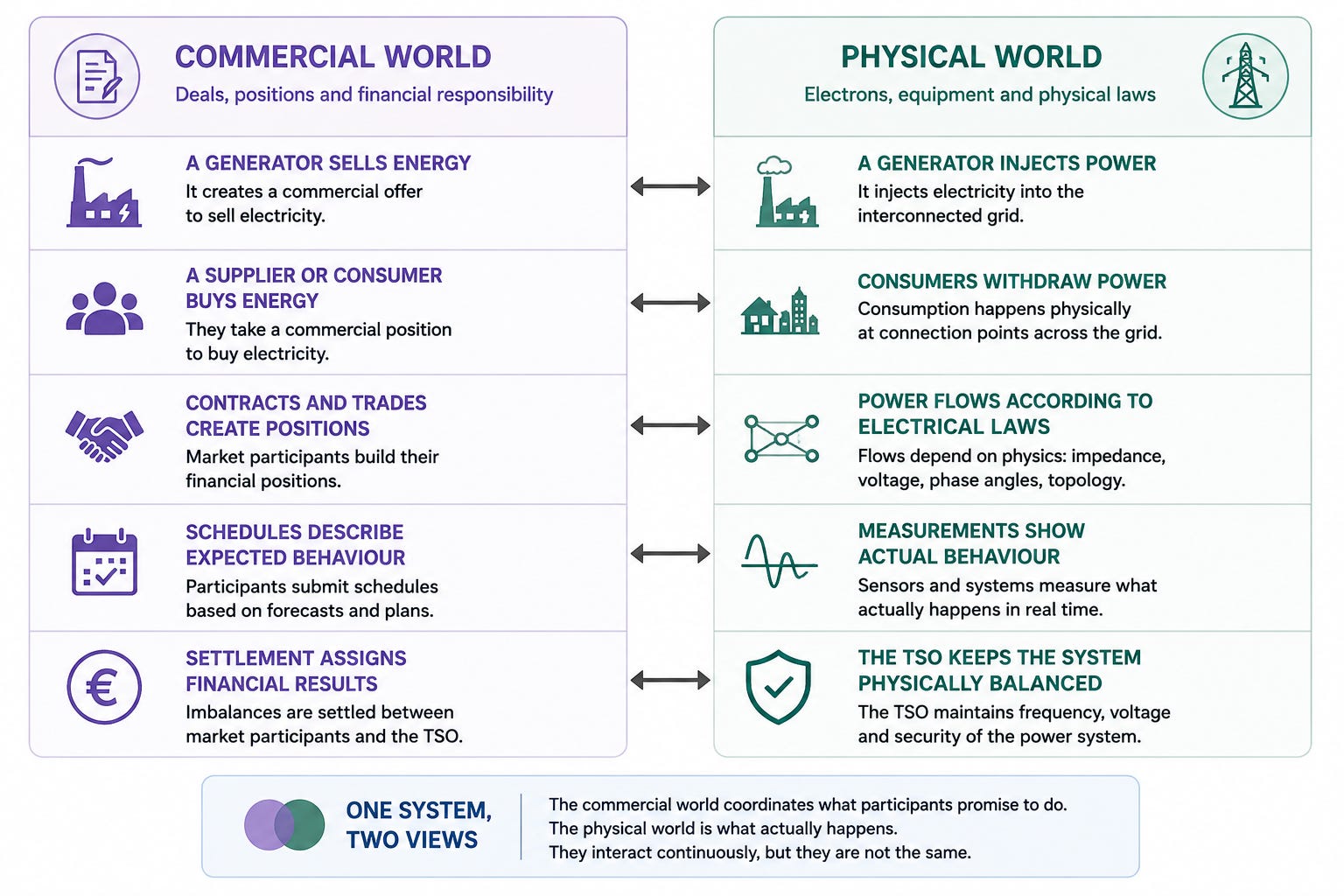
The market does not route electricity. It coordinates what participants promise to inject or withdraw and assigns financial responsibility when their actual behaviour differs from those promises.
Contracts create the commercial plan
A seller and a buyer agree on an amount of electrical energy for a particular delivery period and usually for a particular market area.
One participant promises to provide a commercial quantity. Another participant takes the corresponding commercial position.
Across the market, thousands of such trades create the expected commercial balance between production and consumption. Depending on the market and national rules, these positions are translated into schedules, nominations, and other information used by market participants and system operators.
However, the sum of all commercial positions does not guarantee that the physical grid will operate securely.
A market result may be commercially balanced while still creating too much power flow through a particular transmission corridor. A generator may fail after selling its expected production. Consumers may use more or less electricity than forecast. Wind and solar production may differ from predictions.
The TSO therefore uses market schedules together with forecasts, measurements, network models, equipment availability, and security analysis. Commercial planning tells the TSO what participants expect to do. Physical operation determines whether the system can actually support it.
Electricity is traded across different timeframes
Electricity is not traded through one single market.
Participants make decisions at different times because their information and risks change as delivery approaches. A supplier can estimate next year’s consumption, but tomorrow’s forecast will be more accurate. A wind producer knows more about expected generation a few hours before delivery than several months earlier.
The European wholesale market is therefore divided into several timeframes. ACER describes forward, day-ahead, intraday, and balancing as the main connected market stages. [^https://www.acer.europa.eu/electricity/market-rules/market-rules-different-electricity-market-timeframes]
Long-term and forward trading
Long-term contracts are made months or years before delivery.
They include bilateral contracts, power purchase agreements, forwards, futures, and other hedging instruments. Their main purpose is often not to predict every future megawatt-hour precisely, but to reduce exposure to future price changes.
A supplier may want predictable purchasing costs. A generator may need stable revenues to support an investment. A factory may want to protect itself from extreme electricity prices.
Day-ahead market
In the day-ahead market, participants buy and sell electricity for delivery during the following day.
They submit bids and offers for defined delivery periods. Market coupling combines these orders across bidding zones while accounting for the available cross-zonal transmission capacity.
The day-ahead result becomes an important commercial baseline, but it is still based on forecasts.
Intraday market
After the day-ahead market closes, reality continues to develop.
Weather forecasts change. A generator becomes unavailable. Consumption expectations move. A battery operator changes its planned position.
The intraday market allows participants to adjust their positions closer to physical delivery. This helps them reduce the difference between what they previously traded and what they now expect to produce or consume. European intraday trading continues close to real time, subject to the applicable gate-closure rules. [^https://www.acer.europa.eu/news/acer-greenlights-30-minute-intraday-electricity-gate-closure-time-across-eu-borders]
Balancing market
Even after intraday trading, actual production and consumption will not exactly match the commercial positions.
The TSO must correct the remaining physical imbalance in real time. It does this by activating balancing resources that can increase or decrease their generation or consumption.
The balancing market is therefore different from the earlier markets. Forward, day-ahead, and intraday trading allow participants to build and correct their own commercial positions. Balancing allows TSOs to procure and activate the physical flexibility needed to maintain system frequency and avoid a wider failure when the final result still does not match. [https://www.acer.europa.eu/electricity/market-rules/market-rules-different-electricity-market-timeframes]
Not every producer and consumer trades directly
It would be extremely difficult for every household, small generator, factory, and battery to buy and sell every delivery period independently.
The electricity market therefore contains actors that may not produce or consume electricity themselves but organise the commercial side of the system.
They aggregate customers, forecast consumption, access wholesale markets, manage schedules, trade changing positions, issue invoices, and carry financial responsibility.
Supplier
A supplier is the company that manages the commercial electricity relationship with the end customer.
For most households, this is the company that offers the tariff, signs the electricity contract, purchases energy for its customer portfolio, and sends the bill.
The supplier estimates how much electricity its customers will use and purchases corresponding quantities through contracts and markets. It also manages market access, forecasting, billing, customer service, and the financial consequences of differences between expected and actual consumption.
The supplier should not be confused with the DSO.
The supplier manages the customer’s commercial electricity contract. The DSO operates the local network to which the customer is physically connected.
Changing supplier normally changes who sells electricity to the customer. It does not change the physical cable or the local network operator.
What happens when the plan is wrong?
The grid must remain physically balanced, but no forecast is perfect.
A generator may produce less than planned because of a technical failure. A wind farm may produce more than forecast. Consumers may use more electricity than expected during a cold evening or less than expected during a holiday.
Suppose a supplier expects its customers to consume 50 MWh during one settlement period and purchases 50 MWh.
The customers actually consume 52 MWh.
Physically, the grid does not stop supplying them after the contracted 50 MWh has been consumed. The power system continues operating, and the TSO maintains the overall balance using the available physical response and balancing actions.
Commercially, however, somebody must be responsible for the missing 2 MWh and for the costs created by the deviation.
This is where the balance responsible party enters the picture.
Balance responsible party
A balance responsible party, or BRP, is a market role that accepts financial responsibility for the imbalance of a portfolio.
A BRP may manage a portfolio containing generators, suppliers, consumers, traders, storage systems, or aggregators. A company can become a BRP itself, or it can contract another BRP to carry its balance responsibility.
EU electricity-market rules require market participants either to be BRPs or to contractually delegate their balance responsibility to one, apart from limited exceptions. Each BRP is financially responsible for its imbalance and must strive to remain balanced or help the system remain balanced. [https://eur-lex.europa.eu/eli/reg/2019/943/oj/eng]
The BRP can be understood as the commercial boundary around a portfolio.
Inside that boundary, there may be many injections and withdrawals:
power plants producing electricity;
suppliers serving consumers;
factories consuming electricity;
batteries charging and discharging;
traders buying and selling market positions.
The BRP tries to make the portfolio’s total commercial position match its expected physical behaviour.
What does a BRP actually do?
A BRP does not simply wait until an imbalance happens and then pay the bill.
It actively manages the portfolio before delivery.
Its work can include:
forecasting production and consumption;
collecting plans and availability information from portfolio members;
purchasing or selling electricity in long-term and day-ahead markets;
updating positions through intraday trading as forecasts change;
submitting schedules and position information required by market rules;
monitoring expected production and consumption;
reacting to plant failures or forecast changes;
receiving allocated metering data after delivery;
calculating or checking the portfolio’s imbalance;
settling the remaining imbalance with the connecting TSO.
Before the applicable intraday gate closure, a BRP can change schedules and use the intraday market to reduce an expected shortage or surplus. After delivery, the TSO calculates the difference between the BRP’s final position and its allocated physical volume for each imbalance settlement period. That difference is settled using the applicable imbalance price. The precise procedures vary between countries and balancing arrangements. [https://eur-lex.europa.eu/eli/reg/2017/2195/oj/eng]
Returning to our example, the supplier’s customers consumed 52 MWh while only 50 MWh had been purchased.
If the supplier belongs to a BRP portfolio, the shortage becomes part of the BRP’s total position. Other generators or consumers inside the same portfolio may partly offset it. If the portfolio still has a net shortage of 2 MWh, the remaining imbalance is settled between the BRP and the TSO.
The BRP therefore resembles an insurance provider only in a limited sense: it accepts responsibility for a risk that individual participants may not want to manage alone.
However, unlike normal insurance, it does not simply absorb the cost. It forecasts, trades, aggregates opposite deviations, charges its portfolio members, and manages the remaining financial exposure. Calling it a portfolio manager with balance responsibility is more accurate than calling it insurance.
For another practical explanation, the Next Kraftwerke overview of the BRP role provides a useful industry perspective.
BRP and BSP are not the same thing
The abbreviations are similar, but the roles solve different problems.
A BRP carries financial responsibility for the difference between the commercial position and the allocated physical behaviour of its portfolio.
A balancing service provider, or BSP, provides physical flexibility that the TSO can activate. A BSP may operate a power plant, battery, industrial load, aggregated portfolio, or another controllable resource capable of changing its injection or withdrawal.
One company may perform both roles, but they remain separate responsibilities.
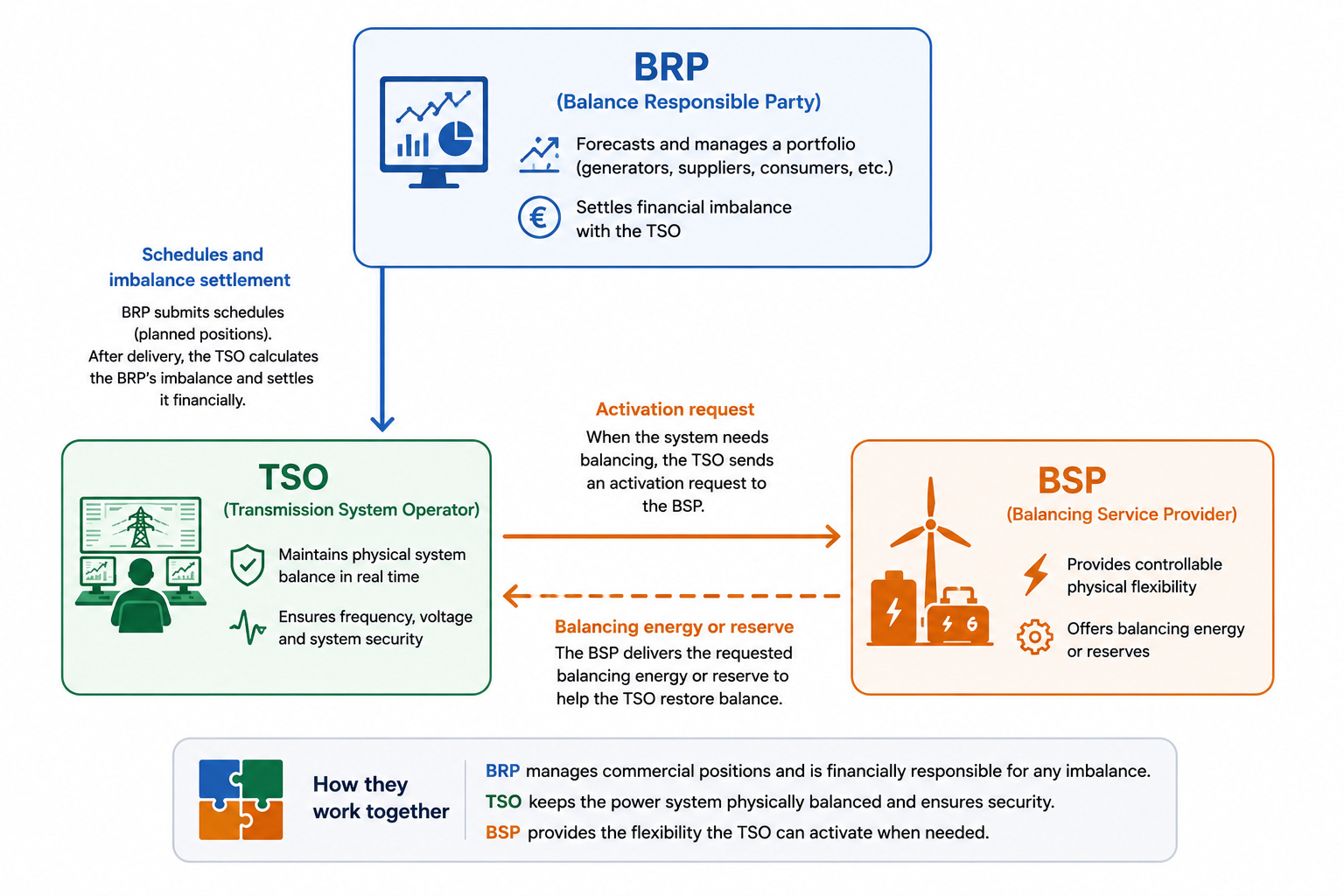
Figure 2: The BRP manages the commercial deviation, while the BSP provides the physical response activated by the TSO.
Suppose a power plant unexpectedly disconnects.
Its BRP becomes exposed to the resulting commercial shortage. The BRP may have reduced that exposure through intraday trading before gate closure, or other assets in its portfolio may offset part of it.
At the same time, the TSO sees the physical power-system imbalance and activates balancing resources from BSPs.
The TSO solves the immediate physical problem.
The imbalance-settlement process assigns the commercial consequences.
This is where the two parallel worlds intersect.
The physical system cannot wait for contracts to be corrected. The TSO must keep it stable immediately. The commercial system then determines whose position differed from reality and who pays or receives money as a result.
That is the central purpose of the electricity market: not to route individual electrons from seller to buyer, but to coordinate planned injections and withdrawals, create prices, support efficient use of the network, and assign financial responsibility around one shared physical machine.
Putting the layers together
Consider a wind farm connected to a regional network and a factory consuming electricity elsewhere.
The physical flow begins with the wind farm injecting power into the interconnected system. The factory withdraws power through its local distribution network. The electricity reaching the factory is not a private stream routed from that particular wind farm.
The commercial flow is represented by contracts and market positions. The wind farm may sell through a trader or aggregator. A supplier buys electricity and sells a contract to the factory. A NEMO may operate the day-ahead or intraday market where part of the position is traded.
The operational flow is managed by system operators. The DSO operates the networks to which the wind farm and factory are connected. The TSO monitors the wider system, manages congestion, and procures balancing services. If wind production differs from the schedule, the physical system still has to remain balanced.
The financial-responsibility flow is assigned through balance responsibility. The relevant BRP carries the imbalance caused by the difference between scheduled and actual production or consumption. A BSP may provide balancing energy when activated by the TSO.
The regulatory flow begins with EU and national rules, continues through ACER and the national regulator, and becomes licences, tariffs, methodologies, grid codes, company processes, and technical requirements.
No single company owns or controls the complete process. The European electricity sector works through coordinated responsibility distributed among specialised actors.
What this means for software engineers
Once we understand the structure, many technical requirements stop looking arbitrary.
Suppose a team receives a requirement to record every control action with the user identity, timestamp, previous value, new value, source system, and reason for the change. From a narrow product perspective, this can look excessive.
However, the requirement may exist because several organisations share responsibility, an incident must be reconstructed, a regulator may require evidence, a control action can have safety consequences, or incorrect data can create financial liability.
The feature is not merely audit logging. It is the software representation of responsibility.
The same pattern appears in requirements for redundancy, strict time synchronisation, role-based access, configuration approval, long retention periods, traceable calculations, formal testing, standardised protocols, controlled updates, and operation during partial failures.
Some of these requirements come from physics. Some come from regulation. Most come from the interaction between technical reality and institutional responsibility.
When you begin work on an energy software system, ask eight questions:
Who owns the relevant asset?
Who operates the asset or process?
Who buys the software?
Who uses the software every day?
Who defined the requirement?
Who receives or relies on the data?
Who carries the operational and financial risk?
Who checks that the system complies with the rules?
The answers reveal the architecture around the architecture.
They explain why the system needs particular interfaces, security boundaries, access models, audit records, approval flows, availability targets, deployment procedures, and lifecycle guarantees.
Conclusion
When I entered the electricity sector, I tried to understand it as a simple chain. Someone produced electricity. Someone transported it. Someone sold it. Someone consumed it.
That picture was not completely wrong, but it was too small to be useful.
The sector is deliberately divided into specialised roles. Ownership, operation, commercial responsibility, and regulation are separate layers. A company may own an asset without operating the wider system. It may operate critical infrastructure while being privately owned. It may buy software whose requirements were defined by a regulator, a network code, or another operator.
Once these layers are separated, the collection of strange abbreviations starts to form a system.
More importantly, we can answer the questions that matter when building software:
Who is our customer? Who is our user? Who defined the requirement? Who pays for the system? Who carries the risk? And who will be responsible when something goes wrong?
These questions do not replace technical analysis. They tell us which technical problems actually matter.
All articles of the series:
